
 Image 1 of 1
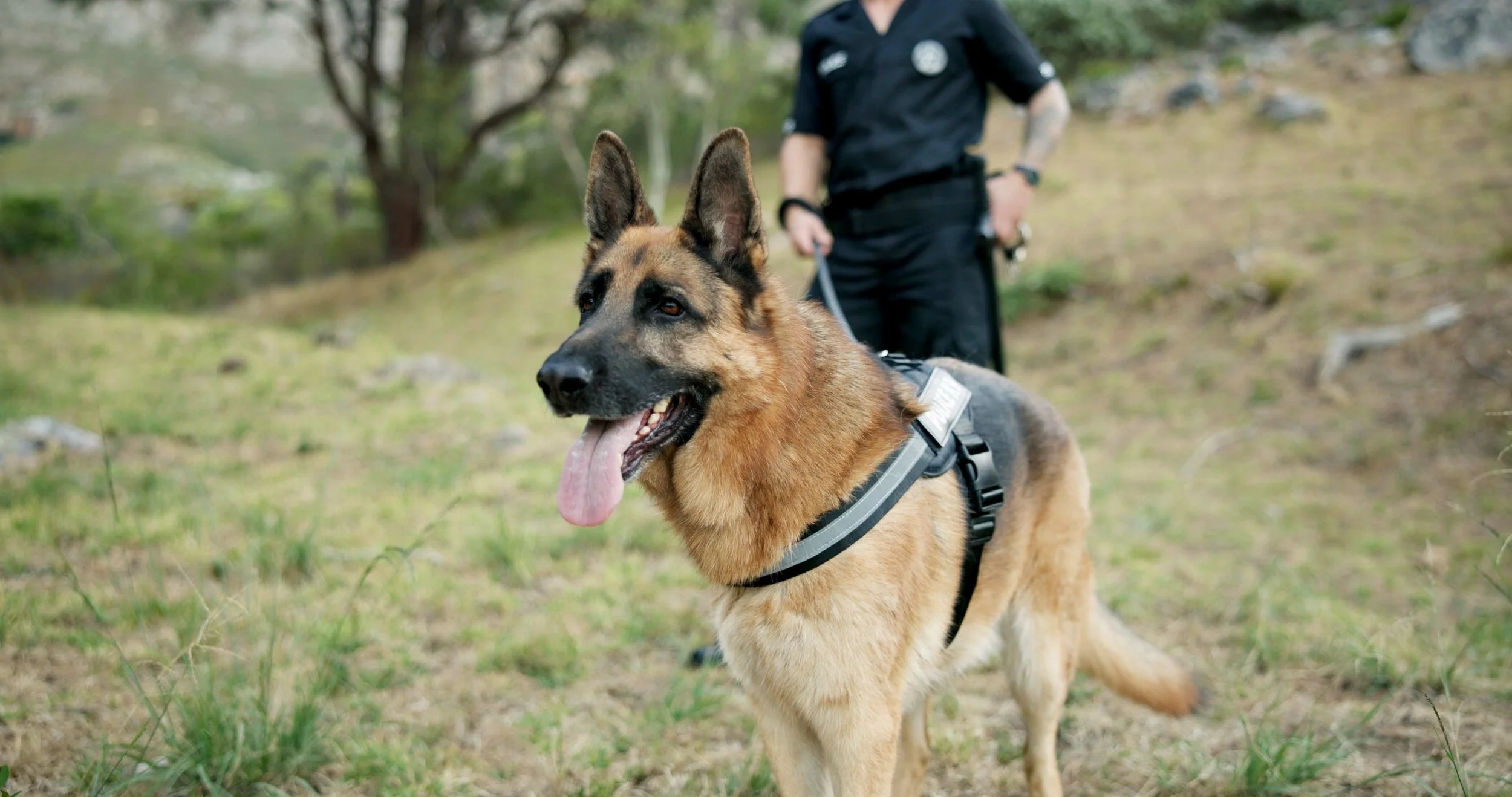
Detection and Protection Working Dog Specialists (DPWDS) operate and manage specialist working dog teams in complex environments, often alongside other agencies, and may occasionally work overseas. While they can handle dogs themselves, their primary role involves managing, developing, and supporting basic dog handlers to ensure safe and effective operations.
DPWDS work in varied conditions, from austere and isolated environments like military operations or disaster relief to congested areas such as transport hubs. Their tasks include using detection dogs for explosives, narcotics, or electronic devices, deploying dogs to locate hostile individuals, or assisting in search and rescue missions. In charitable contexts, they may support de-mining or locating victims of natural or man-made disasters. Employers range from government departments to private companies and charities, and DPWDS must adapt to rural, urban, tropical, or arctic conditions.
The core purpose of this occupation is to manage specialist working dogs effectively to meet operational objectives in high-pressure or complex environments. DPWDS’ expertise includes dog behaviour, scent science, and welfare, enabling them to deploy dogs effectively while safeguarding health and performance.
To support the preparation for End-Point Assessment (EPA), we provide:
Handbook that covers assessment methods, preparation and requirement checklists, advice and what to expect on assessment day.
Standard specification
A mandatory EPA planning meeting with the Independent End-Point Assessor (IEPA)
Regular Training Provider information sessions
Find out more about this End-Point Assessment by viewing the ST1298 specification.
View our fees here.
Read more about the apprentice journey and why VetSkill is the right End-Point Assessment Organisation (EPAO) for you in our Level 3 Detection and Protection Working Dog Specialist fact sheet.
Assessment methods:
-
A structured professional discussion will be conducted between the apprentice and the Independent End-Point Assessor (IEPA). The professional discussion will provide the apprentice with the opportunity to demonstrate the Knowledge, Skills, and Behaviours (KSBs) mapped to this assessment method to the highest grade possible.
Throughout the apprenticeship, the apprentice will have compiled a portfolio of evidence demonstrating the required KSBs. The apprentice must be given access to their portfolio of evidence during the professional discussion and can refer to and illustrate their answers with evidence from this portfolio, however the portfolio of evidence is not directly assessed.
Learn more about this assessment method in the ST1298 specification.
Duration: 60 minutes (+10% if required)
Location: Apprentice’s workplace (either face to face or remote)
Graded: Fail / Pass / Distinction
-
In the observation with questions, the IEPA observes the apprentice in their workplace and asks questions. The apprentice completes their day-to-day duties under normal working conditions.
The time for questioning is included in the overall assessment time. The IEPA must ask at least five (5) questions; follow-up questions are allowed where clarification is required. It gives the apprentice the opportunity to demonstrate the KSBs mapped to this assessment method.
Learn more about this assessment method in the ST1298 specification.
Duration: 1 hour
Location: Apprentice’s workplace (either face to face or remote)
Graded: Fail / Pass / Distinction
Interested in our End-Point Assessment service?
Fill in our contact form or email us and a member of our End-Point Assessment Team will get in touch.